Who we are
Innovate with us!
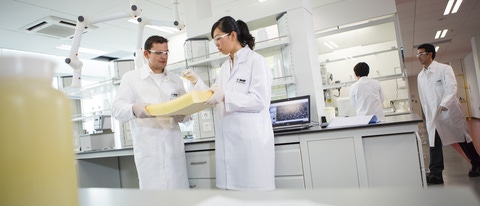
In 2025, approximately 9,000 employees worldwide were working in BASF's R&D units. Our global network of top universities, research institutes and companies gives us direct access to external scientific expertise, talented minds from various disciplines as well as new technologies. This strengthens our Research and Development Verbund and makes BASF an even more attractive partner and employer. In 2025, we collaborated with multiple companies as well as with 269 universities and research institutes. Join our network of innovators!
Make a new bond with BASF – The Chemistry of Collaboration
Collaboration is about Connection, Connection is about people. Who or what can we help you find? #Letscreatechemistry


What type of bond are you looking for?


Related News Releases:
Date
Results: 2176
BASF increases prices for neopentylglycol and 1,6-hexanediol in Europe
The price increase is driven by the global supply-demand situation and rising raw material costs. It is also necessary to support BASF’s ongoing commitment to providing the highest levels of product and service quality while supporting the continued growth of our customers.

BASF Agricultural Solutions invests in new Climate Center at its headquarters to strengthen research capabilities
BASF Agricultural Solutions is investing a low double-digit million-euro amount in a new Climate Center at its headquarters in Limburgerhof, Germany. The purpose-built facility will strengthen the company’s research and regulatory capabilities and support the generation of scientific data required for the registration of crop protection products worldwide.
BASF launches Tinosorb S in the United States
BASF announces availability of Bemotrizinol (BEMT), marketed under the BASF trademark Tinosorb® S, in the United States following the recent approval of Bemotrizinol as a sunscreen active ingredient by the U.S. Food and Drug Administration (FDA).

Green Energy Manufacturing: BASF Drives Renewable Energy Use in the Plastics Industry
As sustainability becomes an increasingly important business priority, driven by growing expectations for transparency, CO₂ reduction, and circularity across the value chain, companies are looking for practical solutions to accelerate their transformation.

Mix of technologies required to recycle engineering plastics
A mix of recycling technologies is necessary to ensure that a broad variety of plastics can be recycled. Unlike high-volume commodity plastics such as the polyolefins used in packaging, specialty plastics often require recycling technologies tailored to their specific properties and applications.